The Havoc of Progress
Reading all the cybersecurity news about “Black October” this week got me thinking deeply about times like this, when the fundamentals and assumptions we rely on stop holding. I’m a futurist and technology optimist at heart, and I’m convinced that AI will eventually be a net positive for our society. But we still have to live through this transition period, however painful and devastating it is.
What we’re experiencing today is called cultural lag in sociology: technology changes faster than our institutions, rules and norms can adapt, and the capabilities arrive before we have worked out how to live with them.
You can feel the uncertainty in the economy and the job market. The value of skills, the security of careers, even our confidence in the systems we depend on are all being questioned. Assumptions that held for decades suddenly feel open for renegotiation, at a speed that feels almost apocalyptic.
Society needs enough stability for people to build a life. Choosing what to study, committing to a profession or making any long-term decision all require some confidence that the rules will remain recognizable long enough for those decisions to make sense. What is happening today is that our shared social rules are losing their power to guide people. In sociology, this phenomenon is called anomie.
Today, there is a sense of confusion, emptiness and hopelessness around us. Rightfully so, because if you cannot see how your efforts connect to a future you can always count on, being told to keep adapting starts to feel hollow.
One may think these issues are only relatable to people immersed in the AI echo chamber. But our economies are more connected than ever, and technology runs our entire lives. Everything from banking, healthcare and education to all the businesses we work for is connected through technology. Disruptions travel through employers, supply chains and the services people rely on, eventually trickling down to everyone.
I know with full conviction that all of this will eventually bring prosperity to humanity. But nobody knows how far the disruption will go, how long this transition will last, or how much instability people will have to absorb along the way.
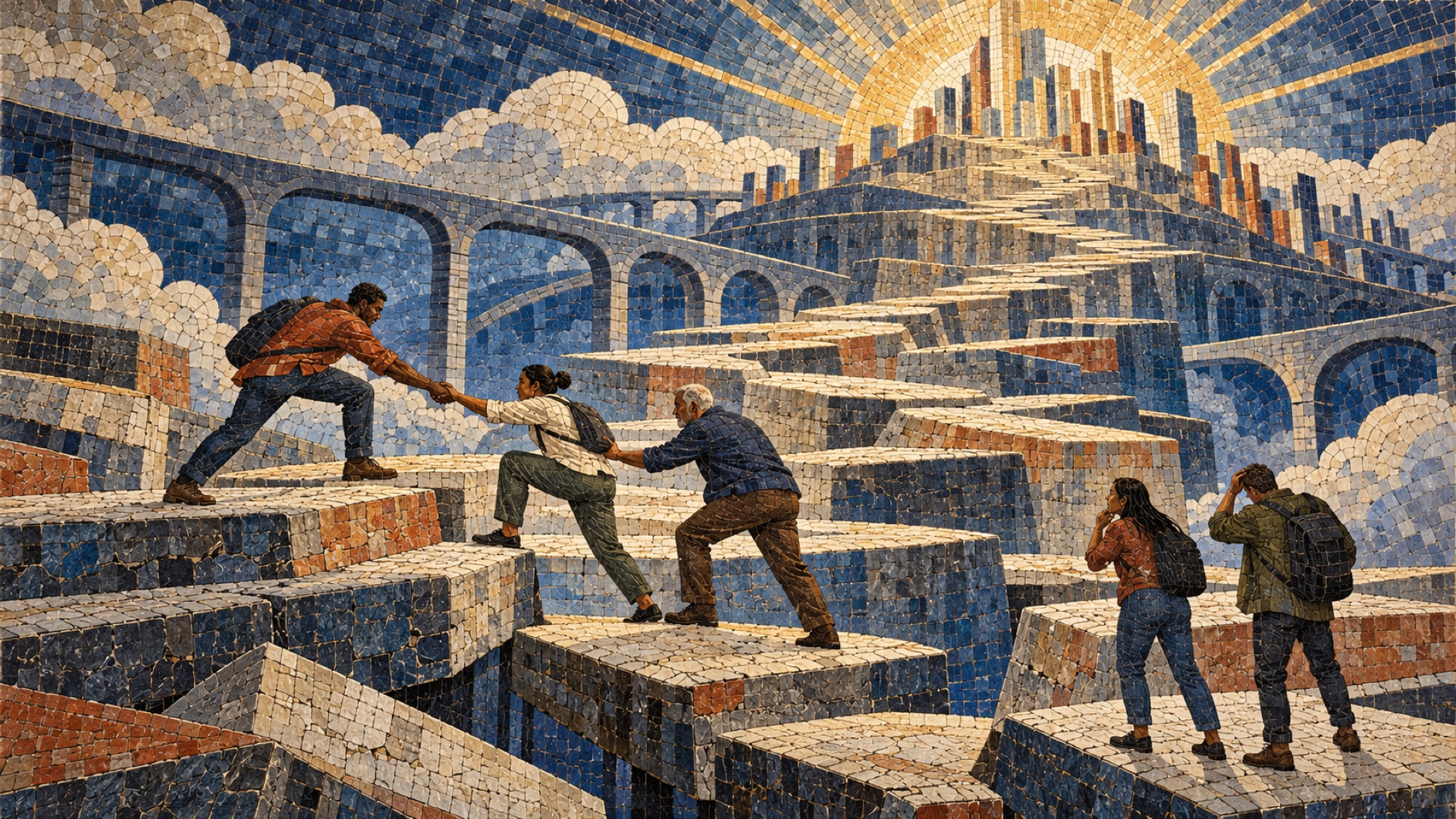
I don’t buy the idea that one person running thousands of AI agents makes other people unnecessary. Being more capable individually doesn’t replace strong teams or our need to communicate and collaborate. For me, that means sharing what we’re learning, helping each other through changes in work and life, and being patient when someone feels lost. We’re all navigating unfamiliar territory without a compass, and it helps to have people to figure things out with.